
 Español
 Portugues
 Pусский
 Français
 Deutsch
 日本語
日本語 한국어
한국어 العربية
 Italiano
 Nederlands
 Ελληνικά
 Svenska
 Polski
 ไทย
ไทย Türk dili
 हिन्दी
 Indonesia
 Melayu
 Tiếng Việt
 中文
中文 dansk
dansk Magyar
 қазақ
қазақ বাংলা
বাংলা עִברִית
 čeština
 Soomaali
 မြန်မာ
 فارسی
فارسی українська
 norsk
norsk Gaeilge
 беларускі
 Română
 ພາສາລາວ
 Filipino
 lietuvių
 Cymraeg
 македонски
 Suomalainen
 slovenský
 o'zbek
 اردو
اردو հայերեն
 Igbo
Igbo български
 سنڌي
سنڌي Shona
Shona සිංහල
සිංහල Hrvatski
 íslenskur
 galego
 català
 Zulu South Africa
 Afrikaans isiXhosa
 ಕನ್ನಡ
ಕನ್ನಡ lëtzebuergesch
 Indonésia Sunda
 Кыргызча
 тоҷикӣ
 Србија
 Twi
Twi Hawaii
 Cebu
Cebu नेपाल
नेपाल euskara
 frissi
 יידיש
יידיש latvija
 slovenija
 kiswahili
 ਪੰਜਾਬ
ਪੰਜਾਬ پښتو
پښتو საქართველოს
 hua moni
 bosna
bosna Kreyòl ayisyen
 Eesti
Eesti Gàidhlig na h-Alba
 Samoa
Samoa Монгол
 Azərbaycan
 አማራ
አማራ Shqipëria
 Malagasy
 Malta
Malta ខ្មែរ
ខ្មែរ Chicheva
 中文(繁体)
 ଓଡିଆ
ଓଡିଆ Setswana
 Afrikaans
 Aymara
 Башҡорт
 Türkmenler
 ትግሪኛ
ትግሪኛ Afaan Oromoo
 অসমীয়া
 Kinyarwanda
 Ilocano
 Wolof
Wolof अवधी
अवधी Oluganda
 Bikol
Bikol Fulɓe
Fulɓe Kikongo
 Sango
Sango ދިވެހި
 Lingala
 मैथिली
 Tsonga
 ꯃꯦꯏ ꯊꯥꯏ꯫
 brezhoneg
 Furlan
 नेवा
नेवा རྫོང་ཁ
 Santali
 Аҧсуа
Аҧсуа Нохчийн
 Чӑваш
Чӑваш Татар
Татар Batak Karo
 دری
دری Diura
Diura Fengyu
 Eʋegbe
 Iban
Iban Fiji
Fiji Tonga
Tonga Inuktitut
 Nahuatl
 maaya yucatec
 Runasimi
 guarani
 Qafar
Qafar Acholi
 Dinka
Dinka Luo
Luo Lundi
Lundi isiNdebele
 Tshivenḓa
 Sesotho sa Leboa
 Sesotho sa Borwa
 Ndumbe
 Papuan Pidgin
 Rromani ćhib
 Thok Nath


Oil Production Equipment Distribution
Oil production equipment distribution refers to the organized supply, storage, transportation, and delivery of machinery and components used in the extraction, processing, and handling of crude oil. It plays a vital role in ensuring that oil fields, drilling sites, refineries, and maintenance teams receive the right equipment at the right time. Because oil production operations often take place in remote, harsh, and time-sensitive environments, an efficient distribution system is essential for keeping projects running safely and smoothly.The equipment involved in oil production distribution is diverse. It may include drilling rigs, pumps, valves, pipes, compressors, separators, tanks, control systems, safety devices, and maintenance tools. In addition, consumable items such as seals, gaskets, filters, lubricants, and spare parts must also be distributed regularly. Each item has different technical requirements, storage conditions, and delivery priorities. Some components are heavy and oversized, while others are delicate and require special protection during transport. As a result, the distribution process must be carefully planned and coordinated.A successful distribution network begins with forecasting demand. Operators and suppliers must estimate what equipment will be needed based on drilling schedules, production targets, maintenance cycles, and emergency reserves. Accurate forecasting helps prevent shortages, reduce downtime, and avoid excessive inventory costs. Once demand is identified, equipment is sourced, inspected, and prepared for shipment. Quality checks are important because defective or damaged equipment can lead to costly delays and safety risks.Transportation is one of the most important parts of oil production equipment distribution. Heavy machinery may need trucks, ships, rail, or even helicopters to reach remote locations. Route planning must consider road conditions, weather, customs procedures, and loading limits. In many cases, equipment must be packaged in a way that protects it from moisture, dust, corrosion, and vibration. For international distribution, documentation, permits, and compliance with safety and trade regulations are also necessary.Warehouse management is another key element. Facilities used for storing oil production equipment must be secure, well organized, and able to handle large or specialized items. Inventory systems are often used to track item locations, quantities, serial numbers, and maintenance histories. This allows operators to quickly find and distribute the required parts when needed. Proper labeling and categorization also improve efficiency and reduce the chance of errors.Safety and reliability are central concerns throughout the distribution chain. Many oil production tools are hazardous if handled incorrectly. Workers must follow strict procedures for lifting, loading, unloading, and storing equipment. Training, inspection, and maintenance programs help ensure that equipment remains in good condition before it reaches the field. In addition, emergency supply plans are often established so that critical items can be delivered quickly during breakdowns or accidents.Technology has greatly improved oil production equipment distribution. Digital tracking, automated inventory systems, predictive analytics, and real-time communication tools make it easier to monitor shipments and coordinate supply chains. These technologies increase speed, transparency, and accuracy while reducing waste and operational disruption.In summary, oil production equipment distribution is a complex and essential process that supports the entire oil production industry. It connects manufacturers, warehouses, transport systems, and field operations in a coordinated network. When managed effectively, it helps ensure continuous production, improves safety, and strengthens overall operational performance.
Products
Category:
-
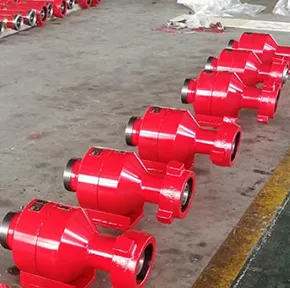
Union Check Valve
Category: Storage SystemsBrowse number: 151Number:Release time: 2026-06-16 17:48:41Union Check Valve, also widely known as union non-return valve or true union check valve, is a one-way automatic control valve specially designed for industrial pipeline systems. It relies on medium fluid pressure to open and close automatically, effectively preventing reverse flow of liquid, gas and oil media in pipelines. Featuring an integrated union connection structure, this valve solves the installation and maintenance pain points of traditional flanged and threaded check valves, enabling quick on-site assembly, disassembly, replacement and routine maintenance without removing the entire pipeline. It is one of the most essential core accessories for oil and gas exploitation, chemical processing, water treatment and industrial fluid transmission systems. -
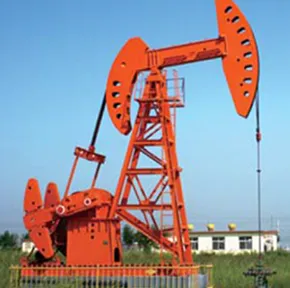
Double horseheads pumping unit
Category: Drilling ToolsBrowse number: 174Number:Release time: 2026-06-22 11:47:53The double horseheads pumping unit is an upgraded energy-saving beam pumping unit optimized and innovated on the basis of conventional single horsehead pumping units, widely adopted in global onshore oilfield mechanical oil production systems. Different from traditional structures, this equipment is equipped with symmetric front and rear double horsehead devices on both ends of the walking beam, forming a unique compound balance power transmission structure. It effectively solves the defects of unbalanced load, large torque fluctuation and high energy consumption of ordinary pumping units, and has become the mainstream energy-saving and efficient oil production equipment for medium and low yield oil wells, high water-cut oil wells and aging oil fields. -
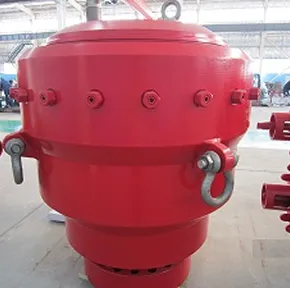
API 16A annular BOP
Category: Cementing ToolsBrowse number: 304Number:Release time: 2026-06-22 12:06:12API 16A Annular Blowout Preventer (Annular BOP) is a core well control safety device specially designed for onshore and offshore oil and gas drilling, workover, well testing and completion operations, fully manufactured and tested in accordance with the latest API 16A international standards and NACE MR0175 anti-sulfur specifications. As the primary safety barrier of the wellhead control system, it undertakes the critical function of flexible wellhead sealing, which can effectively seal annular gaps of different sizes formed by drill pipes, tubing, casing and even completely seal the empty wellhead to prevent well kick, fluid overflow and blowout accidents. Different from ram BOPs with fixed sealing sizes, the annular BOP features omnidirectional flexible sealing performance, capable of adapting to pipe deflection, eccentric placement and different pipe diameters during drilling operations, making it the most versatile and widely used wellhead sealing equipment in the petroleum industry. -
Double Horsehead Pumping Unit for Heavy Oil Production
Category: Drilling ToolsBrowse number: 155Number: SM-PA-001Release time: 2026-06-28 16:29:04Double Horsehead Pumping Unit for Heavy Oil Production is designed for production and artificial lift buyers searching precise oilfield equipment keywords such as Double horseheads pumping unit, sucker rod lift equipment, beam pumping unit, oil well production tools, and export-ready petroleum machinery. This product page explains the overview, technical specifications, applications, advantages, Junchi/SANMON supply capability, FAQ, customer cases, export countries, and request quote process. It helps oil producers, distributors, service companies, and procurement teams compare specifications, confirm documentation, and send a clear inquiry for reliable artificial lift project supply. -
Energy Saving Double Horsehead Beam Pumping Unit
Category: Drilling ToolsBrowse number: 179Number: SM-PA-002Release time: 2026-06-28 16:29:10Energy Saving Double Horsehead Beam Pumping Unit is designed for production and artificial lift buyers searching precise oilfield equipment keywords such as Double horseheads pumping unit, sucker rod lift equipment, beam pumping unit, oil well production tools, and export-ready petroleum machinery. This product page explains the overview, technical specifications, applications, advantages, Junchi/SANMON supply capability, FAQ, customer cases, export countries, and request quote process. It helps oil producers, distributors, service companies, and procurement teams compare specifications, confirm documentation, and send a clear inquiry for reliable artificial lift project supply. -
Cementing Swage Nipple for Casing and Tubing Connection
Category: Cementing ToolsBrowse number: 130Number: SM-14-003Release time: 2026-07-02 21:11:54Cementing Swage Nipple for Casing and Tubing Connection is a precise English product page for buyers searching Google for cementing tool, oil well cementing equipment, casing cementing accessory, Cementing Swage Nipple for Casing and Tubing Connection supplier, oilfield equipment exporter, technical specifications, and procurement guide content. This page includes company elements from Yantai Sanmen Machinery, product overview, technical specification table, applications, advantages, FAQ, customer cases, export countries, and request quote guidance. It is written for contractors, distributors, EPC teams, oilfield service companies, and procurement managers who need reliable product information, clear documentation, suitable packing, international delivery support, and conversion-focused long-tail keywords before sending an inquiry. -
API 11B Sucker Rod
Category: Drilling ToolsBrowse number: 142Number: SM-PK-003Release time: 2026-07-16 13:48:00API 11B Sucker Rod is a precise parameter based product keyword for Google indexing and buyer search. API 11B Sucker Rod helps procurement teams find a focused supplier page for Production & Artificial Lift, technical specifications, export quotation, application matching, packing documents, and international delivery. Yantai Sanmen Machinery Equipment Co., Ltd. presents API 11B Sucker Rod with clear parameter logic, buyer intent, product use, and quotation guidance so contractors, distributors, EPC buyers, and oilfield service companies can compare API 11B Sucker Rod quickly before sending an inquiry. This summary repeats API 11B Sucker Rod naturally for better relevance without hiding the practical purchasing information buyers need. -
5-1/2 Float Shoe Factory
Category: Cementing ToolsBrowse number: 96Number: SM-SF-023Release time: 2026-07-26 17:07:085-1/2 Float Shoe Factory is a specification based product keyword for buyers searching Google for a focused factory or manufacturer page. 5-1/2 Float Shoe Factory helps procurement teams compare parameters, application, documents, and export quotation from Yantai Sanmen Machinery Equipment Co., Ltd.. This page introduces 5-1/2 Float Shoe Factory for Cementing Tools, including specifications, model logic, supplier advantages, packing support, and request quote guidance. Buyers can use 5-1/2 Float Shoe Factory as the main inquiry keyword when checking factory supply, manufacturer capability, and international delivery. -
API Float Shoe
Category: Cementing ToolsBrowse number: 76Number: SM-PS-013Release time: 2026-08-12 20:00:00API Float Shoe is a precise parameter plus product name page for Google indexing and buyer search. API Float Shoe helps procurement teams compare specifications, application, model logic, documents, and export quotation from Yantai Sanmen Machinery Equipment Co., Ltd.. This summary introduces API Float Shoe for Cementing Tools, including parameter description, product use, packing support, and request quote guidance. Buyers can use API Float Shoe as the main inquiry keyword when checking supplier capability, technical fit, and international delivery for API Float Shoe. -
5-1/2 Float Collar
Category: Cementing ToolsBrowse number: 57Number: SM-PS-013Release time: 2026-08-15 03:00:005-1/2 Float Collar is a precise parameter plus product name page for Google indexing and buyer search. 5-1/2 Float Collar helps procurement teams compare specifications, application, model logic, documents, and export quotation from Yantai Sanmen Machinery Equipment Co., Ltd.. This summary introduces 5-1/2 Float Collar for Cementing Tools, including parameter description, product use, packing support, and request quote guidance. Buyers can use 5-1/2 Float Collar as the main inquiry keyword when checking supplier capability, technical fit, and international delivery for 5-1/2 Float Collar. -
8in Drill Collar
Category: Drilling ToolsBrowse number: 16Number: SM-PK-007Release time: 2026-09-26 08:00:008in Drill Collar is a specification-focused product keyword for buyers comparing oilfield equipment, industrial machinery, and export-ready petroleum supply. 8in Drill Collar supports Google search intent by combining parameter and product name in a short title. This summary explains how 8in Drill Collar fits Drilling Tools, with application, model logic, documents, and quotation support from Yantai Sanmen Machinery Equipment Co., Ltd.. Buyers in Nigeria, Ghana, Kenya, Tanzania can use 8in Drill Collar to request clearer specifications, packing details, and delivery planning.
News
Category:
-
[industry news]Why Artificial Lift Equipment Matters for Mature Oilfield Pr...
2026-06-16 12:02:00 -
[industry news]API 16A Annular BOP for Well Control: Pressure Rating, Appli...
2026-06-27 16:26:03 -
[industry news]Double Horseheads Pumping Unit: Artificial Lift Equipment fo...
2026-06-27 16:29:41 -
[industry news]Union Check Valve for Oilfield Pipelines: Non-Return Valve S...
2026-06-27 16:40:56 -
[Company News]Yantai Sanmen Machinery Showcases API 16A annular BOP Advant...
2026-07-13 10:00:00 -
[Company News]Double horseheads pumping unit Technical Highlights from Yan...
2026-07-22 10:00:00 -
[Company News]SANMON Sells Centrifugal Pump, Plunger Pump, Screw Pump, Ele...
2026-08-14 08:00:00 -
[industry news]ESP 60Hz Electric Submersible Pump, Jet Pump, Vibrating Pump...
2026-10-06 10:00:00 -
[Company News]Annular BOP Parameters and Applications for Nigeria Buyers
2026-10-11 10:00:00
Case
Category:
No search results found!
Video
Category:
No search results found!
Download
Category:
No search results found!
Job
Category:
No search results found!
Featured Products
-
NEWS
Union Check Valve
Learn more -
NEWS
Double horseheads pumping unit
Learn more -
NEWS
API 16A annular BOP
Learn more



 WhatsApp
 Phone
Phone