
 Español
 Portugues
 Pусский
 Français
 Deutsch
 日本語
日本語 한국어
한국어 العربية
 Italiano
 Nederlands
 Ελληνικά
 Svenska
 Polski
 ไทย
ไทย Türk dili
 हिन्दी
 Indonesia
 Melayu
 Tiếng Việt
 中文
中文 dansk
dansk Magyar
 қазақ
қазақ বাংলা
বাংলা עִברִית
 čeština
 Soomaali
 မြန်မာ
 فارسی
فارسی українська
 norsk
norsk Gaeilge
 беларускі
 Română
 ພາສາລາວ
 Filipino
 lietuvių
 Cymraeg
 македонски
 Suomalainen
 slovenský
 o'zbek
 اردو
اردو հայերեն
 Igbo
Igbo български
 سنڌي
سنڌي Shona
Shona සිංහල
සිංහල Hrvatski
 íslenskur
 galego
 català
 Zulu South Africa
 Afrikaans isiXhosa
 ಕನ್ನಡ
ಕನ್ನಡ lëtzebuergesch
 Indonésia Sunda
 Кыргызча
 тоҷикӣ
 Србија
 Twi
Twi Hawaii
 Cebu
Cebu नेपाल
नेपाल euskara
 frissi
 יידיש
יידיש latvija
 slovenija
 kiswahili
 ਪੰਜਾਬ
ਪੰਜਾਬ پښتو
پښتو საქართველოს
 hua moni
 bosna
bosna Kreyòl ayisyen
 Eesti
Eesti Gàidhlig na h-Alba
 Samoa
Samoa Монгол
 Azərbaycan
 አማራ
አማራ Shqipëria
 Malagasy
 Malta
Malta ខ្មែរ
ខ្មែរ Chicheva
 中文(繁体)
 ଓଡିଆ
ଓଡିଆ Setswana
 Afrikaans
 Aymara
 Башҡорт
 Türkmenler
 ትግሪኛ
ትግሪኛ Afaan Oromoo
 অসমীয়া
 Kinyarwanda
 Ilocano
 Wolof
Wolof अवधी
अवधी Oluganda
 Bikol
Bikol Fulɓe
Fulɓe Kikongo
 Sango
Sango ދިވެހި
 Lingala
 मैथिली
 Tsonga
 ꯃꯦꯏ ꯊꯥꯏ꯫
 brezhoneg
 Furlan
 नेवा
नेवा རྫོང་ཁ
 Santali
 Аҧсуа
Аҧсуа Нохчийн
 Чӑваш
Чӑваш Татар
Татар Batak Karo
 دری
دری Diura
Diura Fengyu
 Eʋegbe
 Iban
Iban Fiji
Fiji Tonga
Tonga Inuktitut
 Nahuatl
 maaya yucatec
 Runasimi
 guarani
 Qafar
Qafar Acholi
 Dinka
Dinka Luo
Luo Lundi
Lundi isiNdebele
 Tshivenḓa
 Sesotho sa Leboa
 Sesotho sa Borwa
 Ndumbe
 Papuan Pidgin
 Rromani ćhib
 Thok Nath


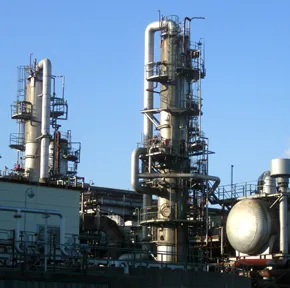
Petrochemical Tower Equipment
Petrochemical Tower Equipment refers to the tall vertical process vessels widely used in the chemical, refining, and petrochemical industries for separating, purifying, and treating mixtures of liquids, vapors, and gases. These towers are essential components in many industrial plants because they support critical mass transfer operations such as distillation, absorption, stripping, and extraction. By enabling efficient separation of components with different boiling points, solubility, or chemical properties, tower equipment plays a central role in improving product quality, process efficiency, and overall plant performance.A typical petrochemical tower is designed as a pressure vessel with a cylindrical shell, internal trays or packing, feed nozzles, distributors, support structures, and top and bottom sections for vapor and liquid discharge. The internal configuration depends on the specific application and operating requirements. Tray columns use plates to provide staged contact between rising vapor and descending liquid, while packed columns use structured or random packing materials to increase contact area and reduce pressure drop. Both designs are selected based on factors such as capacity, separation efficiency, pressure sensitivity, corrosion resistance, and maintenance needs.These towers are used in a wide range of petrochemical processes. In distillation units, they separate crude oil fractions into products such as naphtha, kerosene, diesel, and heavier residues. In gas processing, absorption towers remove unwanted components such as acid gases or moisture from process streams. Stripping towers help remove volatile impurities from liquids, while scrubbing towers capture contaminants from gas flows. Because petrochemical operations often involve high temperatures, high pressures, and corrosive chemicals, tower equipment must be engineered with strong materials and precise fabrication standards.Material selection is a key factor in tower design. Depending on the process medium, towers may be manufactured from carbon steel, stainless steel, duplex steel, alloy steel, or other corrosion-resistant materials. In severe service environments, internal components may require special coatings, cladding, or upgraded alloys to withstand erosion, fouling, or chemical attack. Mechanical integrity is also essential, so design calculations must account for wind loads, seismic forces, internal pressure, thermal expansion, and long-term fatigue.Modern petrochemical tower equipment is often customized to meet specific process goals. Engineers consider factors such as throughput, separation efficiency, energy consumption, fouling tendency, and turnaround frequency. Advanced simulation tools are commonly used to optimize tower height, diameter, internals, and operating conditions. In addition, fabrication quality, welding accuracy, inspection methods, and nondestructive testing are critical to ensuring safe and reliable operation.Maintenance and operational reliability are equally important. Over time, towers may experience fouling, corrosion, tray damage, packing degradation, or internal fouling from heavy hydrocarbons and impurities. Regular inspection, cleaning, and refurbishment help extend service life and reduce unplanned shutdowns. Well-designed tower equipment can operate for many years with proper monitoring and maintenance.In summary, petrochemical tower equipment is a fundamental part of industrial separation technology. Its role in refining and chemical processing makes it indispensable for producing fuels, chemicals, and high-purity products efficiently and safely.
Products
Category:
-
Distillation Columns
Category: Refining EquipmentBrowse number: 190Number:Release time: 2026-06-17 09:58:47A distillation column, also known as a fractionation tower, is the core mass-transfer and separation equipment widely used in petrochemical refining, chemical processing, natural gas purification and energy industry systems. Based on the thermodynamic boiling point difference of mixed medium components, the tower completes continuous vapor-liquid two-phase countercurrent contact, heat exchange and mass transfer, realizing hierarchical separation and purification of crude oil, chemical solvents and gas mixtures. As the backbone of industrial separation processes, it undertakes the key process of cutting different fraction components and improving product purity, which determines the overall production efficiency and product qualification rate of the entire refining and chemical plant. -
Catalytic Cracking Reactor for Refinery Conversion Units
Category: Refining EquipmentBrowse number: 123Number: SM-13-038Release time: 2026-07-02 21:23:41Catalytic Cracking Reactor for Refinery Conversion Units is a precise English product page for buyers searching Google for refinery equipment, petrochemical process equipment, chemical plant equipment, Catalytic Cracking Reactor for Refinery Conversion Units supplier, oilfield equipment exporter, technical specifications, and procurement guide content. This page includes company elements from Yantai Sanmen Machinery, product overview, technical specification table, applications, advantages, FAQ, customer cases, export countries, and request quote guidance. It is written for contractors, distributors, EPC teams, oilfield service companies, refinery buyers, and procurement managers who need reliable product information, clear documentation, suitable packing, international delivery support, and conversion-focused long-tail keywords before sending an inquiry. -
Polymerization Autoclave for Petrochemical Production
Category: Refining EquipmentBrowse number: 113Number: SM-13-041Release time: 2026-07-02 21:23:56Polymerization Autoclave for Petrochemical Production is a precise English product page for buyers searching Google for refinery equipment, petrochemical process equipment, chemical plant equipment, Polymerization Autoclave for Petrochemical Production supplier, oilfield equipment exporter, technical specifications, and procurement guide content. This page includes company elements from Yantai Sanmen Machinery, product overview, technical specification table, applications, advantages, FAQ, customer cases, export countries, and request quote guidance. It is written for contractors, distributors, EPC teams, oilfield service companies, refinery buyers, and procurement managers who need reliable product information, clear documentation, suitable packing, international delivery support, and conversion-focused long-tail keywords before sending an inquiry. -
Tray Column for Refinery Distillation and Absorption
Category: Refining EquipmentBrowse number: 105Number: SM-13-044Release time: 2026-07-02 21:24:13Tray Column for Refinery Distillation and Absorption is a precise English product page for buyers searching Google for refinery equipment, petrochemical process equipment, chemical plant equipment, Tray Column for Refinery Distillation and Absorption supplier, oilfield equipment exporter, technical specifications, and procurement guide content. This page includes company elements from Yantai Sanmen Machinery, product overview, technical specification table, applications, advantages, FAQ, customer cases, export countries, and request quote guidance. It is written for contractors, distributors, EPC teams, oilfield service companies, refinery buyers, and procurement managers who need reliable product information, clear documentation, suitable packing, international delivery support, and conversion-focused long-tail keywords before sending an inquiry. -
Shell and Tube Heat Exchanger for Refinery Service
Category: Refining EquipmentBrowse number: 105Number: SM-13-047Release time: 2026-07-02 21:24:27Shell and Tube Heat Exchanger for Refinery Service is a precise English product page for buyers searching Google for refinery equipment, petrochemical process equipment, chemical plant equipment, Shell and Tube Heat Exchanger for Refinery Service supplier, oilfield equipment exporter, technical specifications, and procurement guide content. This page includes company elements from Yantai Sanmen Machinery, product overview, technical specification table, applications, advantages, FAQ, customer cases, export countries, and request quote guidance. It is written for contractors, distributors, EPC teams, oilfield service companies, refinery buyers, and procurement managers who need reliable product information, clear documentation, suitable packing, international delivery support, and conversion-focused long-tail keywords before sending an inquiry. -
Tubular Heater for Refinery Process Heating
Category: Refining EquipmentBrowse number: 105Number: SM-13-050Release time: 2026-07-02 21:24:41Tubular Heater for Refinery Process Heating is a precise English product page for buyers searching Google for refinery equipment, petrochemical process equipment, chemical plant equipment, Tubular Heater for Refinery Process Heating supplier, oilfield equipment exporter, technical specifications, and procurement guide content. This page includes company elements from Yantai Sanmen Machinery, product overview, technical specification table, applications, advantages, FAQ, customer cases, export countries, and request quote guidance. It is written for contractors, distributors, EPC teams, oilfield service companies, refinery buyers, and procurement managers who need reliable product information, clear documentation, suitable packing, international delivery support, and conversion-focused long-tail keywords before sending an inquiry. -
DN1200 Tray Column
Category: Refining EquipmentBrowse number: 82Number: SM-PS-012Release time: 2026-08-12 10:00:00DN1200 Tray Column is a precise parameter plus product name page for Google indexing and buyer search. DN1200 Tray Column helps procurement teams compare specifications, application, model logic, documents, and export quotation from Yantai Sanmen Machinery Equipment Co., Ltd.. This summary introduces DN1200 Tray Column for Refining Equipment, including parameter description, product use, packing support, and request quote guidance. Buyers can use DN1200 Tray Column as the main inquiry keyword when checking supplier capability, technical fit, and international delivery for DN1200 Tray Column. -
5MW Crude Heater
Category: Refining EquipmentBrowse number: 81Number: SM-PS-012Release time: 2026-08-14 20:00:005MW Crude Heater is a precise parameter plus product name page for Google indexing and buyer search. 5MW Crude Heater helps procurement teams compare specifications, application, model logic, documents, and export quotation from Yantai Sanmen Machinery Equipment Co., Ltd.. This summary introduces 5MW Crude Heater for Refining Equipment, including parameter description, product use, packing support, and request quote guidance. Buyers can use 5MW Crude Heater as the main inquiry keyword when checking supplier capability, technical fit, and international delivery for 5MW Crude Heater. -
DN1200 Tray Column
Category: Refining EquipmentBrowse number: 8Number: SM-PK-017Release time: 2026-10-06 08:00:00DN1200 Tray Column is a specification-focused product keyword for buyers comparing oilfield equipment, industrial machinery, and export-ready petroleum supply. DN1200 Tray Column supports Google search intent by combining parameter and product name in a short title. This summary explains how DN1200 Tray Column fits Refining Equipment, with application, model logic, documents, and quotation support from Yantai Sanmen Machinery Equipment Co., Ltd.. Buyers in Saudi Arabia, UAE, Oman, Kuwait can use DN1200 Tray Column to request clearer specifications, packing details, and delivery planning. -
5MW Crude Heater
Category: Refining EquipmentBrowse number: 10Number: SM-PK-018Release time: 2026-10-07 08:00:005MW Crude Heater is a specification-focused product keyword for buyers comparing oilfield equipment, industrial machinery, and export-ready petroleum supply. 5MW Crude Heater supports Google search intent by combining parameter and product name in a short title. This summary explains how 5MW Crude Heater fits Refining Equipment, with application, model logic, documents, and quotation support from Yantai Sanmen Machinery Equipment Co., Ltd.. Buyers in United States, Canada, Mexico, Brazil can use 5MW Crude Heater to request clearer specifications, packing details, and delivery planning.
News
Category:
-
[industry news]What Global Buyers Should Know About BOP Control Systems and...
2026-06-16 12:10:00 -
[industry news]Distillation Columns for Petrochemical Plants: Tower Equipme...
2026-06-27 16:34:28 -
[Company News]Reactor, Packed Column, Heat Exchanger from Yantai Sanmen Ma...
2026-06-28 17:54:09 -
[Company News]Cracking Furnace, Shell and Tube Heat Exchanger, Industrial...
2026-06-28 17:55:18 -
[industry news]Reactor, Hydrotreating Reactor and Reformer Reactor Refinery...
2026-06-29 14:00:00 -
[industry news]Yantai Sanmen Machinery Petrochemical Reactor Supply Chain f...
2026-06-30 14:00:00 -
[industry news]Heat Exchanger Supplier Guide with Shell and Tube Heat Excha...
2026-07-01 14:00:00 -
[industry news]Crude Heater, Waste Heat Boiler, Storage Tank: Export Procur...
2026-07-02 14:00:00 -
[industry news]Yantai Sanmen Machinery Blog on Cracking Furnace, Residue Re...
2026-07-03 14:00:00 -
[industry news]Reactor, Hydrotreating Reactor and Reformer Reactor Process...
2026-07-04 14:00:00 -
[industry news]Yantai Sanmen Machinery Heat Transfer and Storage Supply Adv...
2026-07-05 14:00:00 -
[industry news]Heat Exchanger Export Guide with Shell and Tube Heat Exchang...
2026-07-06 14:00:00
Case
Category:
No search results found!
Video
Category:
No search results found!
Download
Category:
No search results found!
Job
Category:
No search results found!
Featured Products
-
NEWS
Distillation Columns
Learn more



 WhatsApp
 Phone
Phone